
When Pain Shrinks the World


In the weeks after the October 7 attack in Israel, flyers about the plight of the hostages were posted in my neighborhood. Then they were papered over by new ones about Palestinian suffering. And then those would get replaced – back and forth, layer over layer.
Each set of flyers made the same implicit demand to look at this pain, not that one. As if acknowledging someone else’s suffering would somehow diminish yours.
I watched the flyer war unfold, and at one point even thought about printing my own flyers. Mine would say something like, “pain is, unfortunately, not zero sum. One side’s suffering doesn’t negate or take away from the other side’s suffering. If only it were that simple.”
Of course, I never made those flyers. Because the problem wasn’t information. Everyone already knew, on some level, that both sides were in pain. But knowing it and being able to hold it are two very different things.
Who Started It
It’s the same pattern whenever two people are hurting at the same time. Two adults, both capable and reasonable in other contexts, reduced to something that looks a lot like two kids pointing fingers. But they started it.
They’re in genuine pain, and instead of trying to make the situation better, they fixate on whose fault is it. As an outsider to the conflict, you might be tempted to shake them both and say, “Right now, it doesn’t matter who started it.” (Not to mention that who started it is rarely the clean, black-and-white question people pretend it is.) What matters is that both of them are hurt, and neither is making it better.
Asking whose fault it is looks like a search for truth. It feels righteous. But really, it’s an appeal to a higher power. A boss, a mediator, an audience, or history writ large. Someone to confirm that your pain is the real one, and assign the blame where it belongs.
It’s the adult version of calling for a parent to step in. And underneath all the moral certainty, what they’re really trying to say is something closer to, “This is too hard. I’m too upset. I can’t handle trying to make it better right now.”
But nobody says that part out loud – and that’s the real tragedy. Because there is a world of difference between being right and being effective. Justice matters. But in the heat of conflict, fixation on justice almost always replaces the harder question: what is the best next step I can take to make this better?
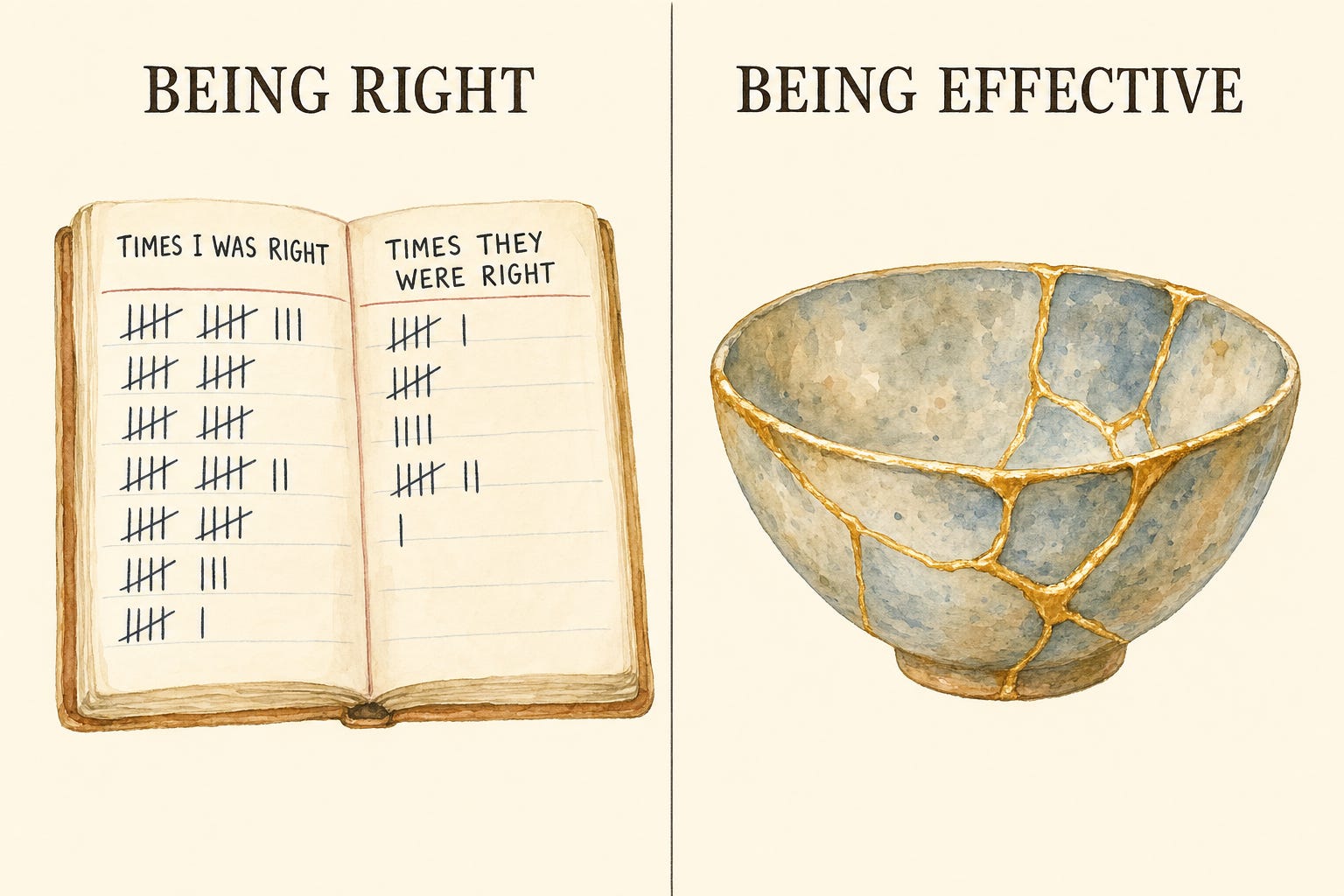
That harder question is agency. Fixating on blame is its abdication.
How the World Gets Smaller
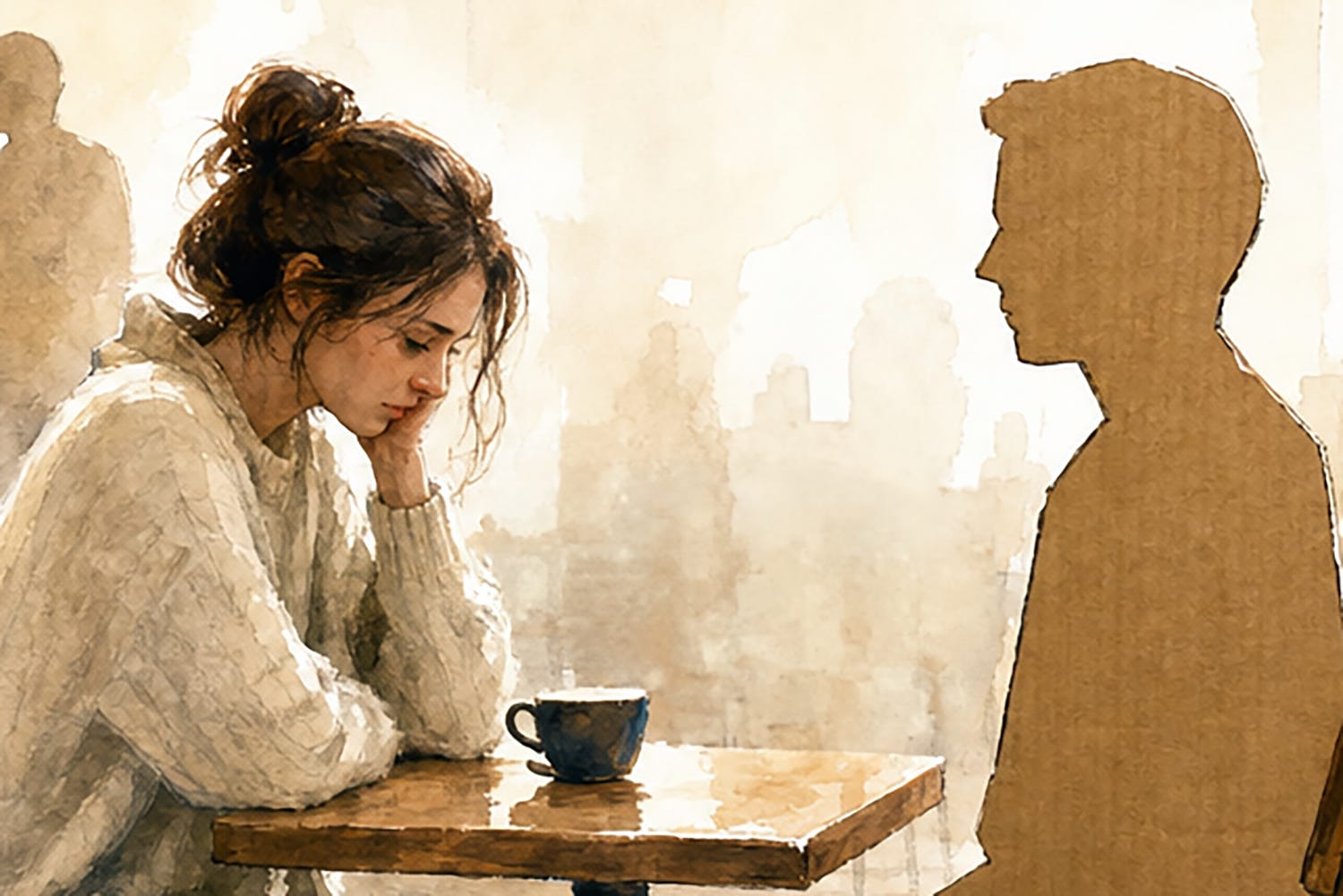
Pain narrows your attention. That’s what the nervous system does under load, and it doesn’t ask permission. Your focus contracts to the immediate threat, and the thing hurting you right now takes up more and more of the frame while everything else gets flatter – including other people.
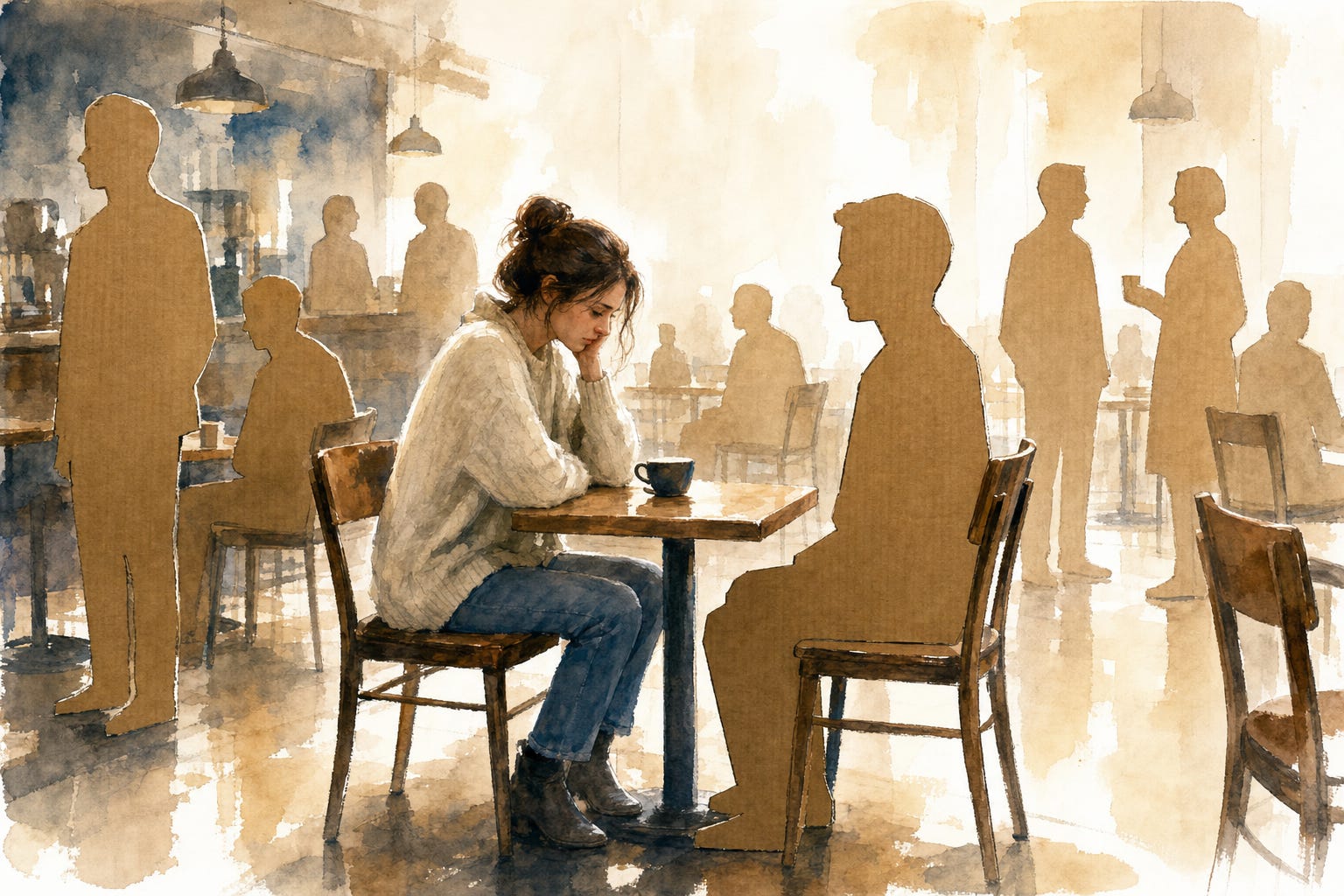
The person on the other side of the conflict stops being a full, complicated human with their own context and pain. They become a cartoon – a two-dimensional obstacle between you and the resolution you’re convinced you deserve.
At that point there’s nothing left to negotiate with. There’s no perspective to share, or repair to attempt. It’s just two people protecting their own interests, each one’s defensiveness confirming the other’s worst assumptions. And it masquerades as insight. When your world shrinks to the size of your own pain, the pain feels more vivid and justified, more deserving of action. You’re not aware that your perspective has narrowed. You’re just more certain than you’ve ever been that you’re right.
So it spirals. The contraction flattens the other person, which makes repair feel impossible, which burns through more of the bandwidth you were already running short on. That cycle explains why arguments between capable, well-meaning people can spiral for months. Why political conversations get worse instead of better. Why two people who both want the same outcome can’t stop fighting long enough to notice.
A client sends a curt email, and you feel disrespected, so your response comes back a little sharp. They feel attacked. Their next message is sharper. Within a week, you’re both drafting talking points instead of doing real work. And often, it’s for nothing – the original email might have been innocuous, but both of you were running at capacity and neither had the margin to absorb the other’s tone.
A World the Size of My Own Pain
When I was twelve years old, my parents split up. It was a lot of change, and a lot of upheaval. Now, I don’t have many regrets – I generally don’t believe in them. But one thing I regret is that I took a lot of that difficulty out on my dad.
With the benefit of age and perspective, I can see more of the picture. His marriage was falling apart, and he uprooted his life to stay close and present with his family. And I was too much of a self-absorbed little shit to even register that while it was hard for me, it was probably orders of magnitude harder for him.
Age and perspective give me compassion for my twelve-year-old self, too. The capacity for that kind of perspective simply hadn’t been built yet. I was just a kid whose world had shrunk to the size of his own pain.
Of course, I’ve had many difficult seasons since then. Life has a way of giving you opportunities to try to do better. And whether you’re able to rise to the occasion isn’t nearly as much about heroics of character as we might like to imagine.
I’ve written previously about my father-in-law passing away, and the business challenges that I was navigating at the time. It was a thick swirl of grief and professional turbulence – one of the most challenging times of my life. And yet, going through it, I was able to hold something that my teenage self couldn’t: the recognition that, as hard as it was for me, it was infinitely harder for others around me. My wife. My mother-in-law. Their pain was so much larger – and this time, I could see it.
Being older helps – a fully formed cerebral cortex makes a lot of things easier.
But a big piece of it is that hard as it was, I wasn’t carrying it alone. And, being close enough to people who were clearly suffering more acutely than I was made it easier to see what I might have otherwise missed.
And yes, part of it was the years I’ve spent building capacity, through practices and habits and doing hard things when the stakes were low.
But even with all of that, it was one of the hardest seasons of my life. The capacity I’d built didn’t make it easy, it just made it doable without being so much that my world had to shrink all the way down. The pull toward contraction was there, but in this case I had enough – barely – to resist.
And that capacity wasn’t exactly the same for every minute of every day. We all need sleep, connection, meaning, and support. Who you are in any given moment isn’t a fixed state, like a platonic ideal – we’re all just the outputs of all those inputs – and one of those inputs, that massively degrades the system, is pain.
Nobody is the villain in their own story, and everyone is doing what they can with what they have. What we “should” be able to handle is not the same as what we actually can on a given day, given everything else that we’re carrying. And that gap isn’t a character flaw – it’s just what happens when the inputs that make better behavior possible have gone missing.
The World Expands Again
So what can we do when we notice our worlds shrinking?
It starts with recognizing the symptoms; fixating on blame and moral certainty, the need to establish who was wronged and who is responsible, and the flattening of the other party into a caricature. These are signals that your agency is going offline.
From there, a good first step is to just stop, and step away. Blame doesn’t have to be assigned now, the case can be made later, and justice will still be available to serve.
But before any of that, what matters is restoration, through the inputs that replenish us. Things like space, sleep, movement, and time – not as luxuries or delay tactics, but as prerequisites for the agency that pain took offline.
One of the inputs that helped most during the season after my father-in-law’s death wasn’t rest or distance. It was proximity. Being close to my wife’s grief and my mother-in-law’s widened my lens. Their pain didn’t compete with mine. It expanded the frame enough that my own suffering stopped being the only thing in the picture.
Because the instinct when your world contracts is to focus inward. Protect yourself. Insist that your suffering deserves all the attention in the room. That instinct makes sense. But it also deepens the contraction. The act of looking outward, of recognizing that someone else is hurting too, doesn’t subtract from your pain. It adds to your capacity to deal with it.
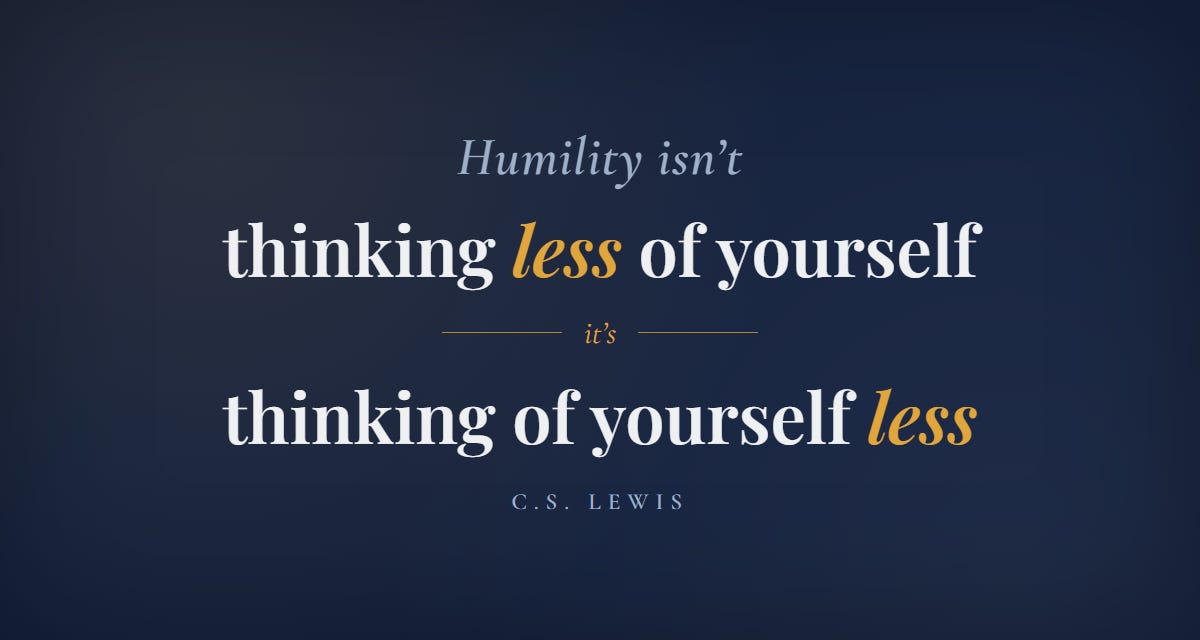
And with a wider frame, better choices become visible. When your attention grows beyond your own suffering, the world gets larger. Compassion expands your available options, and you can see paths you couldn’t see before – including the next right step. It’s C.S. Lewis’s line that “humility isn’t thinking less of yourself – it’s thinking of yourself less.” Usually offered as moral counsel, but it works just as well as a description of mechanism. When less of your attention is bound up in your own situation, there’s more room to perceive the rest of the world.
Responsibility Without Fantasy
Maturity doesn’t mean your world never contracts. Mine still does – every time pain runs ahead of capacity. There’s no version of any of us – no platonic best self waiting in reserve – who is immune. But that’s okay, because we don’t need to become Zen monks, immune to the buffeting of the world around us. We just need to notice when the world has shrunk, and refuse to build a worldview from that temporary narrowing. Then we can take responsibility for restoring our capacity, and bringing our worlds back to normal size.
This isn’t moral theater, or demanding from yourself what your current resources can’t deliver. It’s just recognizing that reaching for maturity – precisely in the moment when you’re least resourced to do it – is hard. Most of the time, the most responsible move is to stop insisting on being right and get yourself back to a place where you can see clearly enough to choose what’s next.
Maturity is the ability to suffer without shrinking the world. Or barring that, it’s the wisdom to restore your capacity before you demand a verdict.
You don’t get to choose how much pain arrives, but you do get to choose how much of your world you let it take.
If you’re enjoying these essays on business, leverage, and growth, my new book AI Curious explores how AI changes the way we think and work.
Get your copy here →
Another great one, Danny, thanks.
This is a most timely article and gets at human nature and how we find it difficult to 'expand' during difficult times. Thank you.